
Pencil Torch vs. Jet Lighter: What’s the Difference (and Which Should You Buy?)
They burn the same fuel and use the same basic mechanism. The difference is the shape of the flame — and that changes which jobs each one is actually good at.
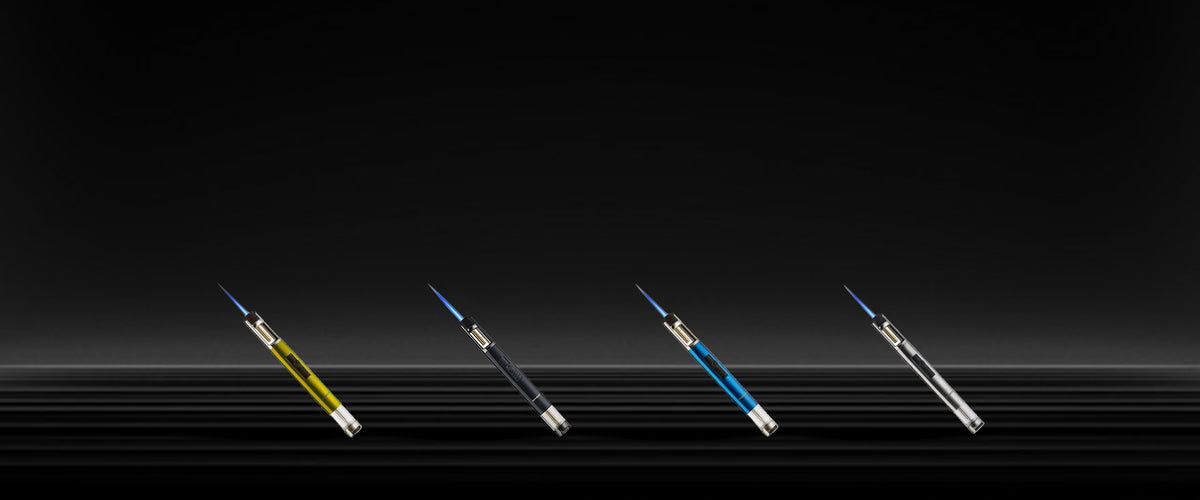
Type “pencil torch” into a marketplace search and you get everything from jeweler’s tools to candle lighters. Type “jet lighter” and half the results are the same products under a different name. The overlap is real: a pencil torch is a jet lighter — just a very specific shape of one.
So the useful question is not which one is “better.” It is which shape fits the jobs you actually do. A slim pencil torch and a full-size jet torch burn the same butane, but they deliver it differently, and that changes everything from how close your hand sits to the flame to how often you refill.
This guide breaks down the real differences, shows where each one wins, and picks three sub-$25 models from the HONEST-LIGHTER lineup.
Key takeaways
- A pencil torch is a jet lighter in a slimmer body with a narrower flame. It is not a different fuel or a different mechanism.
- Choose a pencil torch for reach and precision: candles in deep jars, cigar touch-ups, small crafts, tight spaces, travel.
- Choose a standard jet torch for wind and volume: patios, 60-ring cigars, grills, camping, longer sessions.
- Slim bodies hold less butane. Expect more refills; a standard torch carries a visibly larger tank.
- Under $25 buys a good example of either. For most households, the honest answer is one of each.
Definitions
What a pencil torch actually is
A pencil torch is a butane jet lighter built around a long, slim body and a narrow nozzle. Most are 15–22 mm across and 160–170 mm long — roughly the size of a marker — and they throw a needle-thin flame instead of a wide torch.
The name describes the flame and the body, not the fuel. It runs on butane, refills from a standard can, and usually has an adjustable flame wheel and a small fuel window. The long body is the point: it keeps your hand away from the flame and lets you reach into a jar, behind a grate, or under a shelf.
Every pencil torch is a jet lighter. Not every jet lighter is a pencil torch — a standard torch is shorter and thicker, with a wider flame and a larger tank.
There is also a professional version of this tool: the jeweler’s pencil torch, built for soldering and running hotter and more expensive. The $20 models in this guide are consumer lighters. They are excellent for candles, cigars, and small jobs; they are not plumbing tools.
What a jet lighter actually is
A jet lighter is any butane lighter that forces air into the flame, producing a concentrated blue torch instead of a soft yellow flame. The category includes slim pencil torches, pocket torches, multi-jet table lighters, and long-reach grill lighters.
When people say “jet lighter” in a buying guide, they usually mean the standard, full-size torch: shorter and thicker than a pencil torch, with a wider flame and a bigger tank. That is the comparison this article uses — slim pencil torch versus standard jet torch.
The comparison
The differences that actually matter
Forget the marketing labels for a moment. Five things separate these tools in daily use: flame shape, reach, fuel, wind performance, and how they carry.
| Feature | Pencil torch | Standard jet lighter |
|---|---|---|
| Flame | Narrow, needle-like, single jet | Wider, single or multi-jet |
| Body | 15–22 mm wide, 160–170 mm long, ~80 g | Shorter, thicker, ~220 g |
| Reach | Long neck keeps your hand back | Hand sits closer to the flame |
| Fuel | Small tank | Larger tank |
| Runtime | Shorter; refill more often | Longer between refills |
| Wind | Good, but a single narrow flame can be pushed | Better, especially with two or more jets |
| Precision | Excellent | Good, less exact |
| Best for | Candles, touch-ups, detail work, travel | Patio, 60-ring cigars, grilling, camping |
| Typical price | $20–$25 | $20–$40 |
Body weights are from the HONEST-LIGHTER listings referenced below. Flame temperatures for both are roughly 2,500°F (1,370°C), depending on the fuel/air mix.
Flame shape and heat
Both tools burn butane at about the same temperature. The difference is how much area that heat is spread across. A pencil torch concentrates it into a narrow stream, so you can heat one spot without warming the surrounding material. A standard torch spreads the same heat over a wider circle, which is faster but less forgiving.
That is why a pencil torch is the better tool for a candle wick at the bottom of a jar, and the worse tool for toasting the foot of a 60-ring cigar. A narrow flame on a wide ring gauge means you chase the edges and overheat the middle.
Reach and access
The long body is a safety feature as much as a convenience. You can light a candle, a pilot, or a grill burner with your hand several inches further from the flame than you would with a pocket torch. If you have ever tilted a short lighter sideways and felt the heat on your thumb, this is the fix.
Fuel and runtime
Slim bodies hold less butane. The pen-style models below weigh around 80 g; the standard torch weighs around 220 g. Some of that difference is metal, and some is tank volume. In practice, a pencil torch asks for a refill more often — especially if you use it daily.
Both are refillable, and butane is cheap. The cost of refilling is not the issue; the inconvenience is. If you light something every day, a larger tank is worth the extra bulk.
Wind performance
All jet lighters resist wind better than a soft flame, but “windproof” is relative. A single narrow jet can still be pushed around on an exposed patio; a wider or multi-jet flame holds its shape better. If wind is your main problem, a standard torch wins. If reach is your main problem, a pencil torch wins.
Carry and hand feel
A pencil torch disappears into a shirt pocket or a pen loop. A standard torch is a desk, patio, or glovebox tool. Neither is objectively more convenient; they are convenient in different places.
Use cases
When a pencil torch is the better tool
The long neck and narrow flame solve a specific set of problems. If most of these sound like your week, buy the pencil torch first.
- Candles in deep jars. The neck reaches the wick without tilting the lighter sideways or burning your thumb.
- Cigar touch-ups. A narrow flame fixes an uneven edge without scorching the wrapper. Do not use it to toast a 60-ring from scratch.
- Grills, ovens, and fireplaces. Reach behind a grate or into a burner port without putting your hand inside the cavity.
- Small crafts. Melting wax, sealing cord, shrinking heat-shrink tubing, and light wire work. For structural soldering or plumbing, use a tool rated for it.
- Travel and EDC. Pen-sized, pocketable, and easy to keep in a bag or a glovebox.
- Tight spaces. Behind furniture, inside lanterns, under a shelf — anywhere a short torch forces your hand into the heat.
When a standard jet lighter wins
- Windy patios and golf courses. A wider or multi-jet flame is harder to blow out.
- Large ring gauges. A 60-ring foot needs coverage, not a needle.
- Grilling and charcoal. More flame and more fuel for longer sessions.
- Camping and emergencies. A bigger tank and a more substantial body are easier to use with cold hands.
- Sharing. A table torch is easier to hand to someone than a pen-style lighter.
Three picks
Pencil torches and jet lighters worth buying
All three are refillable butane lighters from HONEST-LIGHTER. Prices were checked on October 24, 2026 and can change; butane is sold separately on most listings.

HONEST Pen-Style Torch Lighter
$19.99
160 × 15 mm · 82 g · single jet + soft flame · black
The one to buy if you want a pencil torch that can also behave like a normal lighter. The switch between jet and soft flame makes it useful for cigars, candles, and anything that does not want a scorching torch. At 15 mm wide, it genuinely disappears into a pocket.
Trade-off: the slim tank runs dry faster than a full-size torch, and the narrow flame is slow on a 60-ring foot.
Check price →
HONEST Straight-in Pen-Style Long Lighter
$19.99 $29.99
170 × 22 × 20 mm · 79 g · single jet · visible gas chamber · black / gold / blue
The extra length and the visible fuel chamber are the reasons to pick this one. You can see the butane level before you need it, and the 170 mm body keeps your hand clear when you are reaching into a jar or behind a grate. The three finishes make it an easy gift.
Trade-off: wider than the pen-style above, and it only does jet — no soft flame mode.
Check price →
Butane Jet Torch Lighter with Butane Window
$21.99 $39.99
Full-size metal body · windproof turbo flame · butane window · navy
The one to buy if wind is the enemy. The wider turbo flame handles a patio better than any pencil torch, the butane window takes the guesswork out of refilling, and the heavier body feels stable in the hand. It is also the better choice for a 60-ring cigar.
Trade-off: bulky for a pocket, and it is not a detail tool — the flame is too wide for tight work.
Check price →Maintenance
How to fill and light a pencil torch without ruining it
Most “broken” torch lighters are not broken. They are air-locked, overfilled, or being lit too soon after a refill. These five steps solve all three.
Bleed the tank first
Press the fill valve with a small screwdriver until the hissing stops. Trapped air takes up space that butane should occupy, and it is the usual cause of a weak or sputtering flame.
Use triple-refined butane
Cheap fuel carries impurities that clog the jet. Triple-refined butane costs a few dollars more per can and saves you a lighter. Do not use multipurpose fuel in a torch.
Fill upright, in short bursts
Hold the lighter and the can upright, press the nozzle into the valve for five to ten seconds, and stop at the first sign of a full tank. A warm lighter sprays back; let it reach room temperature first.
Wait two minutes
Let the butane settle before you light it. Lighting immediately after a fill is the second most common cause of sputtering.
Start low, then adjust
Turn the flame wheel to its lowest setting, light it, then increase slowly. A small flame is easier to control and less likely to scorch a wrapper or a wick.
FAQ
Common questions
Is a pencil torch just a jet lighter?
Yes. A pencil torch is a jet lighter with a slim body and a narrow flame. It uses the same butane fuel and the same forced-air burner. The difference is the form factor, not the technology.
Can I light a cigar with a pencil torch?
For touch-ups, yes — the narrow flame is precise. For toasting a large ring gauge from scratch, a standard torch is faster and more even. Keep the flame a couple of centimetres from the foot and toast slowly; a pencil torch can scorch a wrapper if you rush.
Why does my torch sputter after refilling?
Almost always trapped air or lighting too soon. Bleed the tank before filling, use refined butane, and wait about two minutes after the fill before you ignite it.
Can I use a butane torch indoors?
Only with ventilation, and only for short tasks. Butane vapor can build up in a closed room. Open a window, clear away flammable materials, and use a heat-resistant surface.
How often do I need to refill a pencil torch?
More often than a full-size torch. Slim bodies hold less fuel, so a daily user might refill every week or two; a standard torch can go several weeks. Refill when the flame starts to weaken, not after it dies.
Is butane included?
Usually not. Pressurized butane is treated as dangerous goods for shipping, so most lighters arrive empty. Add one can of triple-refined butane to your first order; it lasts months.
The verdict
Which one should you buy?
If you smoke outdoors, light a grill more than candles, or regularly deal with wind, buy the standard jet torch first. It is the more versatile tool for the way most people actually use a lighter.
If your drawers are full of half-burnt candles, you like a lighter that disappears into a pocket, or you need to reach into tight spaces, buy the pen-style pencil torch first.
If you can, buy both. They solve different problems, and together they cost less than $45. That is the honest answer — and it is the reason this guide does not pretend one shape is universally better.
One shape for reach. One for wind.
Browse the full pencil torch and jet lighter collections, or compare the three picks above side by side.
whoah this wweblog iis great i loove studying your articles.
Keep up the great work! You recognize, many people arre looking rouind for this info, yyou couuld aidd them greatly.
xnxx