
A pen-sized torch is a slim, pen-shaped flashlight. It slides into a pocket or clips to a shirt, so you barely notice it until you need light. Think of it as a small tool that lives with your keys or your badge.
You can carry one every day, grab it during a power outage, or use it for medical exams and close-up inspections. This guide shows you what these lights are and how to use them well.
Key Takeaways
A pen-sized torch is a slim flashlight that fits in your pocket or clips to your shirt.
Use it for close-up tasks like medical exams, repairs, or finding your way during a power outage.
Never shine the light into anyone’s eyes to avoid discomfort and temporary vision problems.
Remove batteries for long-term storage to prevent leakage and keep the torch ready.
Choose a model with high CRI for accurate colors and waterproofing for durability.
What Is a Pen-Sized Torch?
A pen-sized torch is a compact flashlight shaped like a pen. People also call it a penlight or pen torch. You can hold it like a writing instrument, and it often disappears into a shirt pocket or a bag loop. This small light source serves many purposes, from medical exams to late-night repairs.
Design and Size
Manufacturers build these lights to match the size and weight of a standard pen. A slim barrel and a pocket clip define the shape. The clip lets you attach the light to a shirt pocket, a lanyard, or a notebook cover. You barely feel it there until you need it.
Power sources stay simple. According to the Wikipedia article on Flashlight, penlights commonly use two AA or AAA batteries. The PA02 medical pen flashlight follows this pattern with a 2*AAA battery setup. That means you can find replacements at almost any store. You do not need special chargers or proprietary cells.
The small body limits battery capacity, so runtime varies by mode. The Acebeam PT10 penlight, for example, offers High (360 lm), Mid (30 lm), and Low (3 lm) modes with runtimes from 0.8 to 36 hours. A low setting stretches the battery for days of occasional use. A high setting drains it faster but gives you a bright beam for close work.
Light Technology and Features
Bulb options fall into two groups. Older penlights use incandescent light bulbs. Modern models rely on LEDs, which are becoming increasingly common. The PA02 medical pen flashlight uses an LED (Osram) bulb. LEDs run cooler, last longer, and use less power than incandescent bulbs.
Output varies widely across models. The table below shows typical lumen ranges and their best uses.
Lumen Range | Typical Torch Types / Best Uses |
|---|---|
Under 100 lumens | Keychain lights, penlights, micro LED lights — close-range EDC/backup use |
Under 400 lumens | Penlights — home use and small everyday tasks such as reading |
100–400 lumens | Home & camping, general-purpose |
400–1,000 lumens | Work & outdoors, high visibility |
1,000–3,000 lumens | Tactical & search, long-distance |
3,000–7,000 lumens | Rescue & industrial, extreme durability |
7,000–25,000 lumens | Specialized use, maximum output |
Beam distance stays short because of the small reflector. As one source notes:
Penlights typically have a beam range of about 3–5 feet.
That range suits close-up tasks. You can light a patient’s throat, inspect a fuse box, or read a map at night.
Extra features add value. The 2026 mini pocket LED flashlight guide recommends choosing a model with a high-CRI (≥90) LED when accurate color rendering matters. High CRI helps you read labels, check wiring colors, or navigate outdoors at dusk. Waterproofing also matters. The Acebeam PT10 is rated IPX-8, which means it survives continuous immersion. The Tank007 WF01, though marketed as a wearable light, shows what small torches can do:
It includes strobe, blink (0.5 Hz), and SOS modes.
It is rated IPX-6 waterproof, so it withstands powerful water jets.
Its head rotates 180 degrees to adjust beam direction.
Note that the Acebeam PT10 uses an orange-peel reflector and fixed optics. It does not offer adjustable focus. Directional adjustment, like the Tank007’s rotating head, is a different feature. You should check the specs before you buy if focus control matters to you.
How to Use a Pen-Sized Torch Safely
Basic Operation
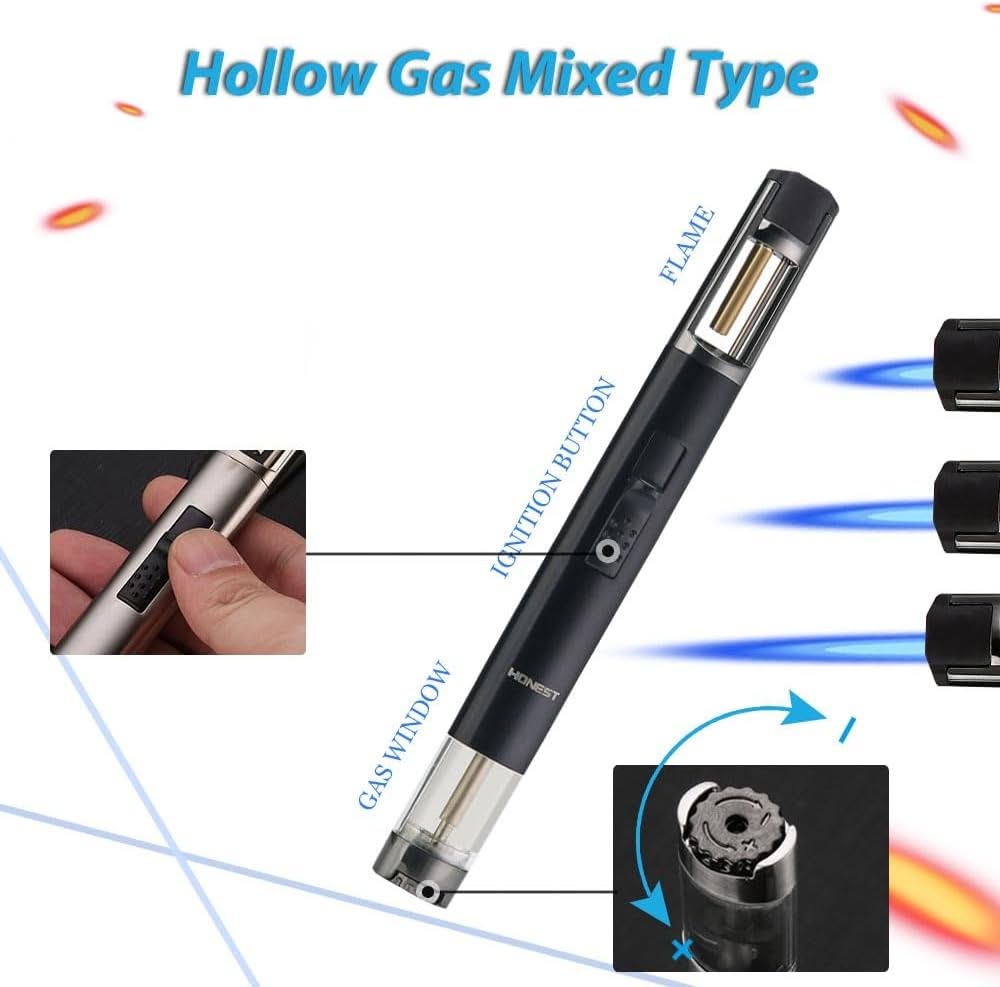
Using one of these lights takes seconds. You hold the barrel like a pen, point the lens where you need light, and press the switch. Most models use a tail switch at the rear. A thumb press turns the light on; a second press turns it off. Other models use a twist head. You rotate the bezel until the light snaps on. The same rotation changes output on multi-mode lights. A typical pen-sized torch puts out under 400 lumens. That output suits close work, not long-distance spotting. The beam reaches only about 3 to 5 feet. That range is enough for a fuse box, a map, or a patient’s mouth. Choose the low mode for a dim, long-lasting beam. Use high mode only when you need maximum light for a short time.
Safety Tips
A pen-sized torch is safe when you respect a few rules. First, never aim the beam into anyone’s eyes. LED light at close range can cause discomfort and temporary vision problems. Use the light to illuminate, not to dazzle. Point it away from faces before you switch it on. These rules protect both you and the light.
Batteries need correct handling. The following manufacturer guidelines apply to common consumer batteries in these torches.
Area | Guideline | Why / Effect |
|---|---|---|
Insertion order | Insert the negative end first, then push the positive end into place; ensure + and – terminals align correctly. | Misalignment can make a device appear to work, but may cause battery leakage or rupture. |
Storage temperature | Store at normal room temperature in a dry place, ideally in original packaging; avoid very warm places; do not refrigerate. | Extreme heat or cold reduces performance and may lead to leakage. |
Idle periods | Remove batteries if the torch is not expected to be used for several months. | Devices can continue to draw power even when switched off, eventually causing leakage. |
Handling / transport | Do not carry loose batteries in a pocket or purse; keep them in original packaging. | Contact with metal objects can short-circuit batteries, causing leakage, overheating, or rupture. |
Battery mixing | Do not mix old and new batteries, different brands, or different types; remove depleted batteries promptly. | Mixed or exhausted batteries may cause leakage. |
Check the orientation before you close the barrel. Match the plus and minus marks to the diagram inside the tube. Insert the negative end first, then push the positive end into place. If the light flickers or refuses to turn on, open it again and inspect the contacts. Turn the batteries around if needed. Do not force a battery into the tube.
Storage matters just as much as insertion. Keep your torch away from heat and moisture when you are not using it. A car dashboard in summer gets too hot. A damp pocket invites corrosion. Remove the batteries for long-term storage. That simple step prevents leakage and keeps the contacts clean.
Do not carry loose batteries in your pocket with coins or keys. Metal objects can bridge the terminals and generate heat. Keep spare cells in their original packaging until you need them. If a battery leaks, clean the compartment with a dry cloth and dispose of the cell according to local rules.
Everyday Uses and Applications
Medical Exams and Inspections
Doctors and nurses reach for a penlight during routine exams. You can check a patient’s throat, ears, or pupils with a narrow beam. The light fits into tight spaces and stays out of the way. A pocket clip keeps it on a scrubs shirt between patients.
Color quality matters for clinical work. A high color rendering index helps you see true tissue colors. The table below shows the recommended values for LED examination lights, which include compact penlights.
Parameter | Recommended Value |
|---|---|
Color rendering index (CRI) | ≥ 95 |
Color temperature | 2700K–6500K |
A CRI of at least 95 ensures accurate color visibility during skin, ear, and oral exams. The adjustable color temperature range lets you match different examination needs and clinician comfort.
Inspections and repairs also suit this tool. You can trace wiring behind a desk, read a serial number in a dark cabinet, or check a fuse box. Mechanics use a pen-sized torch to peer into engine bays and tight panels. Homeowners grab one to look under a sink or inside a closet. The slim barrel reaches spots that a full-size flashlight cannot.
Outdoor and Emergency Tasks
Hikers and campers carry a penlight as a backup light. It weighs almost nothing and clips to a backpack strap. You can read a trail map at dusk or find gear inside a tent without waking others. Anglers use one to tie knots after sunset. Hunters rely on a low mode to move through brush without spooking game.
Emergency kits benefit from a small, reliable light. A power outage turns your hallway into a maze. A penlight in the junk drawer gives you instant light for the breaker box or a candle. The low mode stretches battery life for hours. Keep spare batteries in the kit and check them each season. A strobe or SOS mode adds value if you need to signal for help outdoors.
Choosing and Maintaining Your Torch
Key Features to Consider
You should match the power source to your daily routine. A rechargeable USB-C model suits you if you charge devices every night. Replaceable AAA cells work better for a backup light that sits in a bag for months. Think about beam color for close work. Warm white feels easier on reflective labels and metal edges. A harsh cool beam may look brighter, but it tires your eyes at arm’s length.
Size and build quality matter just as much. Look for a body around 5.2 to 5.6 inches long and 0.5 to 0.8 inches wide. That size slips into a pocket or a narrow access area. A pocket clip keeps the light ready for hands-free use. Choose a durable, waterproof build with an IP67 or IP68 rating and an aluminum body. That construction survives water, oil, and rough handling. Brightness between 100 and 500 lumens covers detailed inspection in dim spaces.
Color accuracy deserves special attention for medical or inspection work. A high CRI value, defined as 90 or above on a 0 to 100 scale, directly improves color accuracy. Colors appear more vibrant and closer to how they look under natural sunlight.
Special Features: High CRI — listed as an available feature for Penlights & Inspection Lights.
This matters because a high CRI light produces a softer, warmer beam. That beam prevents color washout. You can distinguish colored wires, paint defects, and subtle imperfections. The GearLight S100 fits this role well. It offers a compact 5.25-inch by 0.5-inch aluminum body, a non-slip grip, diffused white light, and power from two standard AAA batteries.
Battery Care and Maintenance
Simple habits extend the life of your pen-sized torch. Replace batteries as soon as output drops or the beam flickers. Clean the contact surfaces gently with a clean pencil eraser or a cloth. This step removes residue and keeps the connection strong. Check the battery orientation before you close the barrel. Match the plus and minus marks to the diagram inside the tube.
Remove the batteries if you will not use the light for an extended period. Store the torch in a cool, dry place away from direct sunlight. A protective case or cover prevents physical damage. Keep spare cells in their original packaging. Loose batteries can short-circuit against coins or keys. These steps keep your light ready for the next job.
A pen-sized torch is a small, practical flashlight that fits easily into everyday life. It slides into a pocket or clips to a shirt, so you always have light within reach.
This pen-shaped light source serves many purposes. You can use it for medical exams, close-up inspections, repairs, hiking, camping, or emergency backup during a power outage.
Pick a model that matches your needs. Consider battery type, brightness, and color accuracy. Always handle your light safely, and store it away from heat and moisture.
FAQ
These answers address the practical questions that come up once you start using a penlight.
How bright does a pen-sized torch need to be?
Most penlights produce between 100 and 500 lumens. This range suits close-up work like reading maps or examining patients. You do not need more for a short beam. It reaches only 3 to 5 feet. Choose a lower setting for longer battery life.
What does CRI mean on a penlight spec sheet?
CRI stands for color rendering index. It measures how accurately a light shows true colors. A score of 90 or above means colors look natural. Medical exam lights recommend a CRI of at least 95. Choose high CRI for inspection or clinical work.
What kind of batteries do pen-sized torches use?
Most penlights run on two AA or AAA batteries. You can buy replacements at almost any store. The PA02 and GearLight S100 both use two AAA cells. You do not need special chargers or proprietary cells. Check the orientation before you close the barrel.
Should I store my penlight with batteries inside?
No. Remove the batteries for long-term storage. Devices can draw power even when they are off. This can cause battery leakage. Store the torch in a cool, dry place away from direct sunlight. This simple habit keeps your light ready for the next job.